
For many Omaha drivers, paint protection film (PPF) only becomes a priority after the damage is already visible. Whether it’s a jagged rock chip on a hood that was pristine just two years ago, or the unmistakable scouring of salt and gravel along lower panels after a single Nebraska winter, reacting to damage is often more costly than preventing it.
At Owner’s Pride, we believe the best time to discuss protection is before the first mile is driven. By taking a proactive approach, you can preserve your vehicle’s factory finish and long-term value from day one.
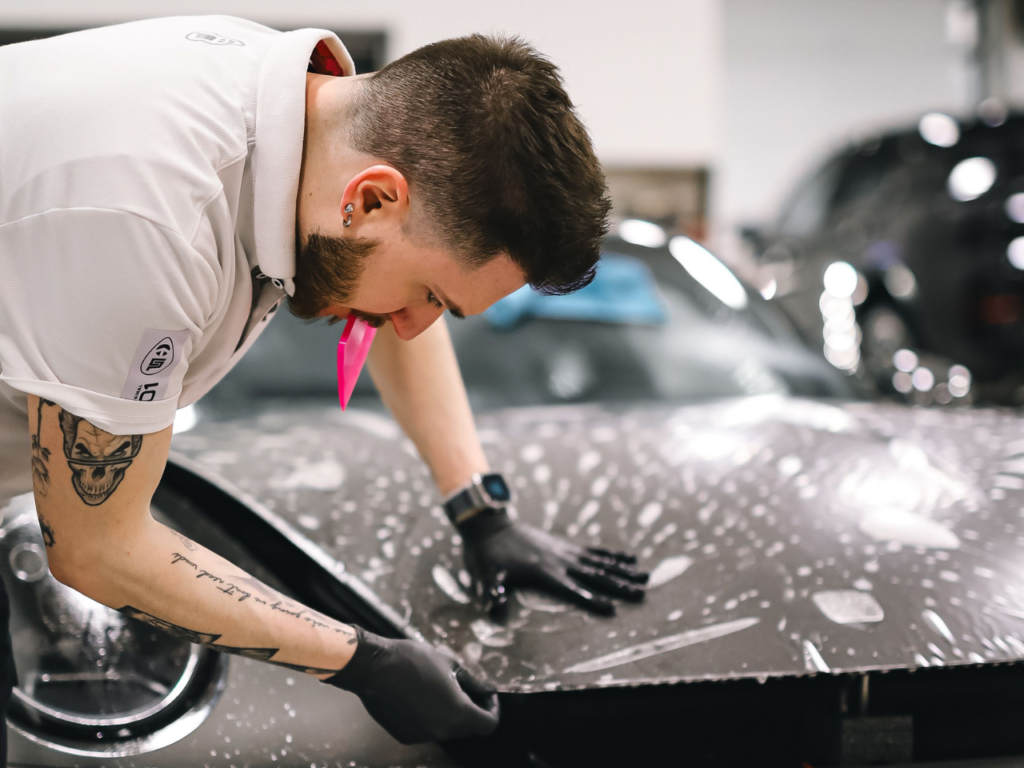
What Paint Protection Film Actually Is
Paint protection film is a thermoplastic urethane layer applied over your painted surfaces. When a rock strikes a PPF-covered panel, the film disperses the impact before it reaches your clear coat. Modern film also self-heals: minor scratches disappear with heat from sunlight or warm water.
PPF and ceramic coating serve different purposes: ceramic coating resists contamination and UV; PPF stops physical impact.
Why Omaha Conditions Make Paint Protection Worth Considering
Nebraska puts specific pressure on vehicle paint that many drivers underestimate until they’ve lived through a few winters.
Between November and March, road salt and sand get kicked up constantly on I-80, on Dodge Street, on the Belt Highway. That mix lands directly on your lower panels, hood edge, and front bumper at highway speed. Over time it accelerates paint erosion and creates the conditions for rust to develop along panel edges.
Summer brings its own set of problems. UV exposure in Nebraska’s open-sky climate is significant. Without protection, a clear coat oxidizes faster than it would in a more temperate environment, fading your paint and making it dull even before the surface damage becomes obvious.
Industry data indicates that vehicles fitted with PPF typically experience about a 30% reduction in visible paint damage after five years compared to those without any film applied. For a vehicle driven daily through Omaha’s seasons, that difference becomes visible within just a couple of years.
What the Investment Actually Looks Like
One of the first questions we get is about cost, and it’s a fair one to ask upfront.
PPF pricing ranges from $600 to $8,000 or more depending on coverage, vehicle type, and installer quality, with full front PPF typically running $1,500 to $3,500. Full vehicle coverage provides maximum durability but comes at a higher price point.
For most Omaha drivers, a full front package covering the bumper, hood, fenders, mirrors, and rocker panels addresses the zones that take the most damage from Nebraska road conditions. That’s where we usually start the conversation.
The harder number to ignore is the cost of not protecting your paint. Repainting a single damaged panel runs $500 to $3,000 depending on the size, color, and complexity of the vehicle. On a vehicle with several chipped or damaged panels, you’re quickly approaching or exceeding the cost of a full front PPF installation. Film also lasts seven to ten years with proper care, so you’re spreading that investment over a significant amount of time.
How Paint Protection Film Affects Your Resale Value
This is the part of the conversation most shops skip, and we think it matters.
According to a national survey of U.S. dealership professionals published by The Shop, 96% of respondents believe applying PPF to all painted surfaces helps retain more of a vehicle’s value, with 70% citing value-retention gains of up to 15%.
When you consider that the average new car in the U.S. now costs close to $50,000, a 15% value retention gain is a meaningful number. Buyers and dealers recognize intact factory paint as a sign that a vehicle was cared for, and PPF is what makes preserving that paint possible through years of real-world driving.
Your vehicle is one of the largest purchases you’ll make. Treating its exterior protection as an investment rather than an expense is a perspective shift that tends to make the decision a lot clearer.
Schedule Your PPF Consultation in Omaha
Before we recommend any coverage plan, we look at your paint’s current condition, how you drive, and what your priorities are. One thing we’re firm on: applying film over damaged paint locks imperfections in and makes them more visible. We talk through that upfront, every time.
Many drivers combine paint protection film with a ceramic coating. The film stops impacts; the coating keeps salt and grime from bonding to the surface. Learn more about our paint protection film options on our website.
Owner’s Pride is a family-owned shop in Omaha. Call (402) 715-9749 or visit our website to schedule a consultation. We’ll assess your vehicle and tell you honestly what makes sense.
Frequently Asked Questions
What does paint protection film actually protect against?
Paint protection film protects against rock chips, road debris, bug splatter, bird droppings, UV fading, light scratches, and road salt. It creates a physical barrier between your paint and the road environment that no wax, sealant, or ceramic coating can match. Modern PPF also self-heals from minor surface scratches with heat from sunlight or warm water.
How long does paint protection film last in Omaha’s climate?
A professionally installed premium film lasts seven to ten years with proper care. Nebraska’s freeze-thaw cycles, road salt, and UV exposure all put pressure on any exterior protection product, which is why professional installation with proper edge sealing and surface prep is especially important here.
Is paint protection film worth it for a daily driver in Omaha?
For a daily driver in Nebraska, it’s one of the most practical investments you can make. Daily drivers accumulate the most damage from road debris, salt exposure, and highway miles. PPF directly reduces the cost of paint chip repairs, lowers the risk of panel repainting, and supports stronger resale value when it’s time to sell.
Can paint protection film be applied to a car that already has paint chips?
PPF is not a repair product and shouldn’t be applied directly over existing chips or paint damage. Existing damage needs to be assessed and addressed before the film goes down. At Owner’s Pride, we inspect your paint first and let you know what prep work is needed before installation begins.
What’s the difference between paint protection film and ceramic coating?
Paint protection film is a physical barrier that absorbs impact from road debris and prevents chips and scratches. Ceramic coating is a chemical bond that adds hardness, UV resistance, and hydrophobic properties to your paint surface. They protect against different things and work best when combined. PPF handles the physical threats; ceramic coating handles environmental ones.
Which panels should I prioritize if I can’t cover the whole vehicle?
The front bumper, hood, front fenders, and rocker panels take the most damage from Nebraska road conditions. A full front coverage package addresses all of these. If the budget requires a phased approach, the front bumper and hood are the highest priority for any vehicle driven regularly on Nebraska highways or gravel roads.
How do I maintain paint protection film after installation?
Use pH-neutral automotive soap and avoid brush-style automatic car washes. Hand washing or touchless washing is recommended, with careful attention to film edges. Have the film inspected professionally once a year. If a ceramic coating was applied over the film, follow the maintenance guidelines your installer provides for that product as well.
About the Author
The Owner’s Pride Omaha Team | Owner’s Pride
Omaha, NE | Automotive Detailing & Protection Services
The Owner’s Pride Omaha Team serves drivers throughout Omaha, Nebraska, delivering high-quality automotive care focused on protection, appearance, and long-term vehicle value. The team is built around a shared commitment to doing work with precision and consistency, ensuring every vehicle receives careful attention from start to finish. Their approach is centered on treating each car with respect and providing results that reflect a high standard of craftsmanship.
At Owner’s Pride Omaha, the team is dedicated to maintaining and enhancing the condition of every vehicle they work on through reliable service and detail-oriented processes. They prioritize customer trust, clear communication, and quality results that help protect and preserve vehicles over time. Their focus remains on delivering dependable service that supports both everyday drivers and automotive enthusiasts in the Omaha area.