
You’ve done your research. You know ceramic coating protects your paint from Nebraska’s road salt, UV exposure, and the daily wear that slowly dulls a finish. You’re ready to invest in it. But here is what most shops won’t spend enough time telling you: the coating itself is secondary to what happens before it is applied.
At Owner’s Pride in Omaha, we’ve seen what separates a ceramic coating that lasts years from one that starts failing within months. It comes down to prep work, every time. We want to walk you through what that process looks like and why each step matters for your vehicle.
Why Surface Prep Is the Foundation of Every Ceramic Coating
A ceramic coating bonds to your paint at a molecular level. For that bond to form correctly, the surface needs to be completely clean, decontaminated, and free of imperfections.
A shocking 70% of ceramic coating failures stem from improper surface preparation rather than the product itself. When contamination is left behind, the coating sits on top of leftover wax or oils instead of bonding directly to the paint. This results in weak adhesion, shorter durability, and hydrophobic properties that fade faster than they should. You invest in a professional-grade coating, only for its effectiveness to be compromised by shortcuts taken before application. At Owner’s Pride, we ensure that never happens.
The Prep Steps That Actually Determine Your Results
Step 1: Decontamination Wash
The process starts with a thorough wash using a pH-balanced, wax-stripping shampoo that removes surface-level dirt while lifting existing wax and sealant residue. This differs from a regular maintenance wash; the goal here isn’t just a clean surface, but a bare one.
Step 2: Chemical and Clay Decontamination
A poorly prepped surface can shorten the lifespan of a ceramic coating by up to 50%. Iron particles from brake dust and road debris embed into your clear coat over time. In Omaha, where daily commutes on Dodge Street and highway miles on I-80 are just part of life, this buildup is significant. We apply an iron remover that dissolves those ferrous particles, followed by a clay bar treatment that pulls out whatever remains. After this step, your paint should feel smooth and glassy. If it still feels rough, the work isn’t done.
Step 3: Paint Correction
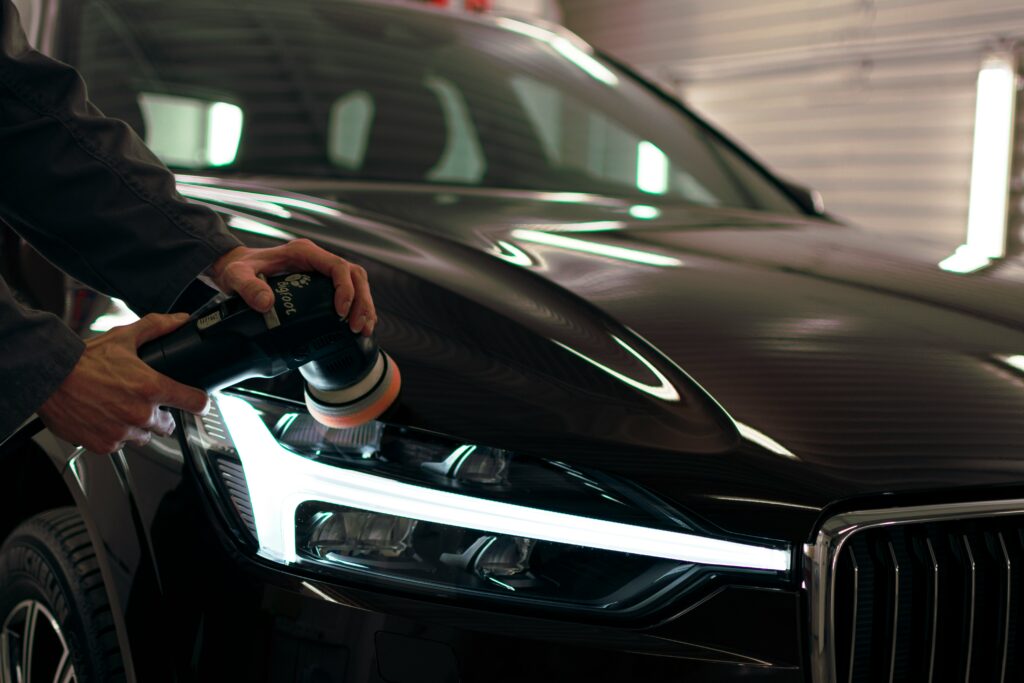
Once ceramic coating is applied, it locks in whatever condition the paint is in. Swirl marks, light scratches, water spot etching, and oxidation all need to be removed before the coating seals the surface permanently. Paint correction uses machine polishers and compounds to level the clear coat and do exactly that.
We assess every vehicle under proper lighting before deciding what level of correction is needed. Some vehicles coming in from Papillion or Millard need a single-stage polish. Others that have been through years of automatic washes need a multi-stage correction. We’ll be honest with you about what we find.
Step 4: IPA Panel Wipe
The final step before the coating goes on is a full panel wipe using isopropyl alcohol to remove any residual polish oils or dust left from correction. Any residue at this stage acts as a barrier between the coating and your paint. The panel wipe is what guarantees the coating bonds to your paint, not to something in between.
What Skipping Steps Actually Costs You
We often hear from customers who chose a different shop first and are now dealing with the consequences: coating lifting in the corners, hydrophobic properties disappearing after one winter, or swirl marks sealed in permanently.
Industry research shows that a shocking 70% of ceramic coating failures stem from improper surface preparation rather than the product itself. Careful preparation doesn’t just ensure a better finish; it acts as a critical investment in longevity, with proper surface decontamination and correction extending the life of a coating by as much as 40%. Skipping decontamination means the coating bonds to impurities rather than the paint; skipping correction amplifies every imperfection under the coating’s gloss; and skipping the panel wipe creates weak spots in the bond. Each shortcut compounds the others—and at Owner’s Pride, we refuse to take them.
How Nebraska’s Climate Makes Prep Even More Important
Omaha’s climate makes thorough preparation more critical than in many other parts of the country. Winter road salt finds every weak point in a poorly bonded coating and attacks the paint beneath it. Summer UV exposure accelerates the breakdown of a coating that hasn’t fully adhered. Freeze-thaw cycles between November and March stress any edge where adhesion is incomplete. A properly prepared and coated vehicle handles these challenges with ease, whereas a vehicle coated over contamination will show weaknesses within the first season.
What to Expect When You Come to Owner’s Pride
When you bring your vehicle to us for ceramic coating in Omaha, we assess the paint honestly before anything starts. We look at it under proper lighting, evaluate what contamination and correction are needed, and give you a clear picture of the process upfront. If your paint needs correction first, we’ll tell you directly. We’d rather have that conversation early than deliver results that don’t hold up.
Once prep is complete and the coating is applied, we’ll walk you through proper aftercare so you get the full life out of your investment. If you want to combine your ceramic coating with paint protection film for complete protection, we can discuss that as well.
Call us at (402) 715-9749 or visit our website to schedule your consultation.
Frequently Asked Questions
Why does prep work matter so much for ceramic coating?
Ceramic coating bonds to your paint at a molecular level. Any contamination, oil, wax residue, or surface imperfection left on the paint before the coating is applied acts as a barrier to that bond. The result is weaker adhesion, shorter durability, and reduced hydrophobic performance. Proper prep is what allows the coating to bond directly to clean, corrected paint and perform the way it’s designed to.
Does my car need paint correction before a ceramic coating?
It depends on the condition of your paint. If your vehicle has swirl marks, light scratches, water spot etching, or oxidation, those imperfections need to be corrected before the coating goes on. Once ceramic coating is applied, it seals the surface and locks in whatever condition the paint is in. At Owner’s Pride, we assess your paint under proper lighting before recommending a correction stage.
How long does the prep process take for ceramic coating?
A full prep process including decontamination, clay bar treatment, paint correction, and panel wipe typically takes several hours, sometimes a full day or more depending on the vehicle’s condition. Rushing this process is what leads to premature coating failure. We take the time the job actually requires.
Can I get ceramic coating on a vehicle with existing rock chips or paint damage?
Ceramic coating is not a repair product. It protects the surface it’s applied to but doesn’t fill or hide paint chips or bare metal. Existing chips should be addressed before coating, both to protect the exposed paint and to prevent moisture from working under the film. We’ll assess your vehicle and let you know what prep work is needed before anything gets coated.
How long does ceramic coating last if the prep is done correctly?
A professional-grade ceramic coating applied over properly prepped paint typically lasts five to seven years with proper maintenance. Skipping or rushing prep work can cut that lifespan significantly. In Nebraska’s climate, where road salt and temperature cycling put constant pressure on the coating, proper prep is especially important for long-term performance.
What’s the difference between a ceramic coating and wax or sealant?
Wax and sealants sit on top of your paint and wear off over time, typically within a few months. Ceramic coating chemically bonds to the clear coat and forms a semi-permanent layer of protection that’s significantly harder, more hydrophobic, and more resistant to UV damage, chemical etching, and light scratching. It’s a fundamentally different level of protection, but only when applied correctly over a properly prepared surface.
Do I need to do anything to maintain my ceramic coating after installation?
Yes. Ceramic coating requires regular maintenance to perform at its best. That means washing regularly with a pH-neutral automotive soap, avoiding brush-style automatic car washes, and having the coating inspected professionally once a year. Owner’s Pride will walk you through a specific maintenance routine after your installation so you get the full life out of your investment.
If you have further questions or are ready to protect your vehicle, reach out to our experts today.
About the Author
The Owner’s Pride Omaha Team | Owner’s Pride
Omaha, NE | Automotive Detailing & Protection Services
The Owner’s Pride Omaha Team serves drivers throughout Omaha, Nebraska, delivering high-quality automotive care focused on protection, appearance, and long-term vehicle value. The team is built around a shared commitment to doing work with precision and consistency, ensuring every vehicle receives careful attention from start to finish. Their approach is centered on treating each car with respect and providing results that reflect a high standard of craftsmanship.
At Owner’s Pride Omaha, the team is dedicated to maintaining and enhancing the condition of every vehicle they work on through reliable service and detail-oriented processes. They prioritize customer trust, clear communication, and quality results that help protect and preserve vehicles over time. Their focus remains on delivering dependable service that supports both everyday drivers and automotive enthusiasts in the Omaha area.